
Safe Bathing Tips for Newborns: A Practical Guide for New Parents
Bath time with your newborn can be a tender, bonding experience—but it can also feel a bit nerve-wracking if you’re unsure about the safest way to do it. You’re not alone. Many new parents share this concern. So, let’s walk through some straightforward, expert-backed tips to help you feel confident and keep your baby safe during bath time.
1. Start with Sponge Baths
In the first few weeks, your baby’s umbilical cord stump is still attached. Until it falls off—usually within 1–2 weeks after birth—stick to sponge baths. Use a soft washcloth and warm water to gently clean your baby’s face, neck, hands, and diaper area. This approach helps keep the area dry and reduces the risk of infection.
2. Water Temperature: Lukewarm, Not Hot
Newborns have sensitive skin, so the water temperature is crucial. Aim for a lukewarm bath—about 98.6°F to 100°F (37°C to 38°C). Before placing your baby in the water, test it with your wrist or elbow. These areas are more sensitive than your hands and can help you gauge the temperature more accurately.
3. Choose Gentle, Fragrance-Free Products
Your baby’s skin is delicate and can be easily irritated. Opt for mild, fragrance-free baby soaps and shampoos. Products labeled as “hypoallergenic” are often a good choice. Avoid adult products, as they may contain harsh chemicals or fragrances that could irritate your baby’s skin.
4. Keep Bath Time Short and Sweet
Newborns don’t need daily baths. Two to three times a week is usually sufficient. Over-bathing can dry out their skin. Keep each bath short—around 5 to 10 minutes—to prevent your baby from getting cold or overstimulated.
5. Gather Everything Before You Start
Before you begin the bath, have everything you need within arm’s reach: a clean towel, mild baby soap, a soft washcloth, and a clean diaper and clothes. This way, you won’t need to leave your baby unattended, even for a moment.
6. Use a Safe Bathing Setup
Choose a baby bathtub that has a non-slip surface and is designed for newborns. Some parents use a clean sink for the first few weeks, but be cautious. Kitchen sinks, in particular, can harbor bacteria from food preparation and may not be the safest option.
7. Always Support Your Baby
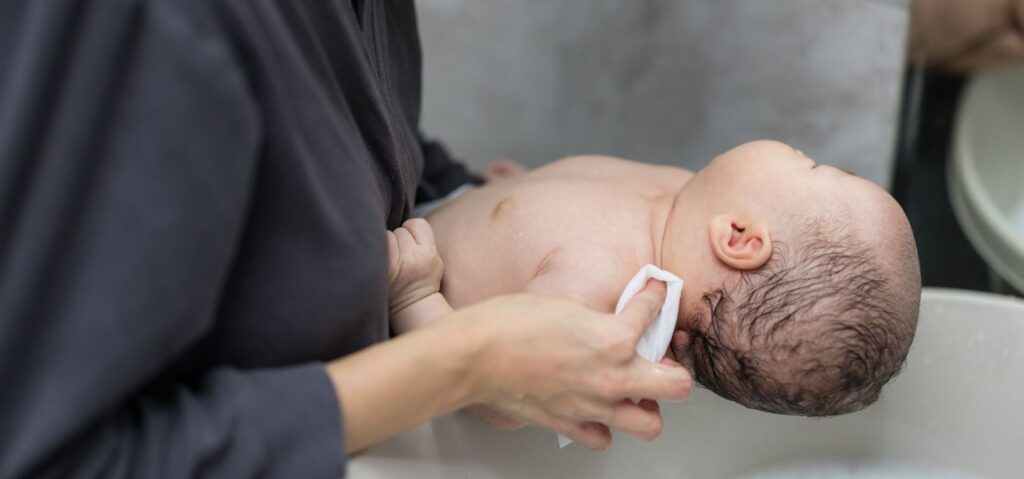
During the bath, always support your baby’s head and neck. Use one hand to gently hold your baby’s head and the other to wash their body. This support is crucial, as newborns have limited muscle control and can slip easily.
8. Never Leave Your Baby Unattended
Drowning can happen quickly and silently. Always keep one hand on your baby and never leave them alone in the bath, even for a second. If you need to step away, wrap your baby in a towel and take them with you.
9. Dry and Dress Promptly
After the bath, gently pat your baby dry with a soft towel, paying special attention to skin folds. Dress your baby in clean, comfortable clothes to keep them warm. If your baby has dry skin, you might consider using a fragrance-free moisturizer.
10. Clean Bath Toys Regularly
If your baby uses bath toys, clean them regularly to prevent mold buildup. Fill them with a cleaning solution, let them soak, rinse thoroughly, and allow them to air dry completely. This helps ensure your baby’s bath environment remains safe and hygienic.
Quick Safety Reminders
- Water Depth: Keep the water level low—no more than 2 inches deep.
- Room Temperature: Ensure the room is warm to prevent your baby from getting cold.
- Slippery Surfaces: Use a non-slip mat in the tub to prevent slipping.
- Emergency Preparedness: Familiarize yourself with infant CPR and have emergency numbers readily available.
Common Questions
A: It’s not necessary. Bathing two to three times a week is usually sufficient. Over-bathing can lead to dry skin.
A: Once your baby can hold their head up steadily and shows signs of readiness, usually around 6 months, you can consider transitioning to a regular bathtub. Always supervise closely.
A: Avoid using adult soaps, shampoos, or any products with fragrances or harsh chemicals. Stick to baby-specific products labeled as gentle and hypoallergenic.
Bath time doesn’t have to be stressful. With a little preparation and attention to safety, it can become a cherished part of your daily routine. If you have any concerns or questions, don’t hesitate to consult your pediatrician.